Where Companionship Fits in the Modern Luxury Spending Landscape

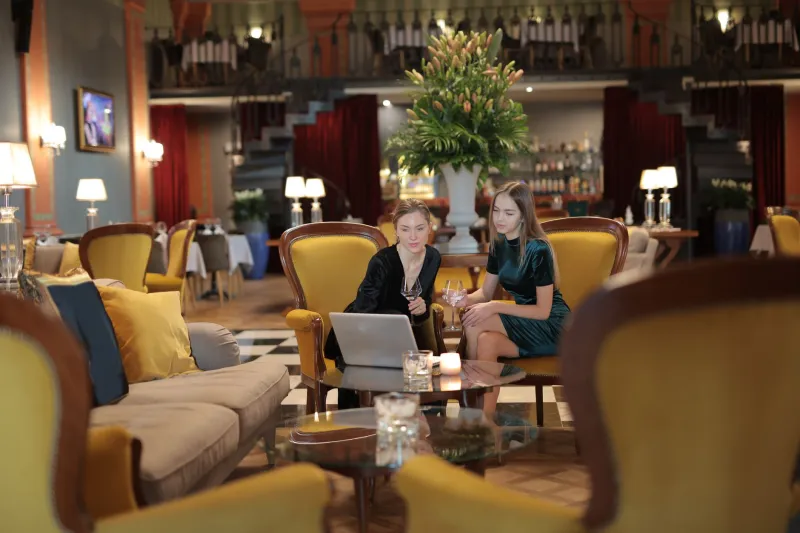
Photo: affluent professional at luxury rooftop bar city skyline evening, via clipart-library.com
The American luxury market has undergone a quiet but seismic reorientation over the past decade. Where previous generations of affluent consumers measured status through objects—watches, vehicles, real estate—today's high-net-worth individuals are increasingly directing their discretionary spending toward experiences. A weekend at a Relais & Châteaux property in Napa. A private chef's table in Chicago. A curated itinerary through the American Southwest with a knowledgeable guide.
Premium companionship, long confined to the margins of this conversation, is now occupying a more central position than many observers expected. Understanding why requires a closer look at how luxury is currently being defined, what drives value perception in the experience economy, and what sophisticated clients are actually weighing when they decide how to spend.
The Experience Economy, Briefly Explained
Economists B. Joseph Pine II and James H. Gilmore introduced the concept of the experience economy in the late 1990s, arguing that the most durable form of economic value is not a product or even a service, but a memorable experience. Their framework has proven remarkably prescient. The industries that have thrived most consistently in the decades since—hospitality, fine dining, bespoke travel, live entertainment—are precisely those that deliver not just a transaction but a story worth telling.
Premium companionship fits squarely within this framework. At its most basic level, it is a service. But at the level where platforms like Anu Escort operate, it is something considerably more: a curated, personalized experience designed to deliver genuine value across social, intellectual, and personal dimensions.
Pricing Psychology and the Premium Signal
One of the more counterintuitive findings in luxury consumer research is that price itself functions as a quality signal. When affluent consumers evaluate competing options for discretionary spending, a higher price point does not necessarily deter—it often attracts. This is not irrational behavior. It reflects a learned heuristic: in markets where quality is difficult to assess in advance, price serves as a proxy for vetting.
Premium companionship platforms understand this dynamic well. The investment required to engage a companion through a curated service is not incidental to the experience—it is part of what communicates that the experience has been carefully assembled. The companion has been vetted. The platform has standards. The client's time and privacy will be respected.
Compare this to the fragmented, unvetted alternatives available in lower-tier markets, and the premium pricing becomes not just understandable but rational.
Competing With Fine Dining and Luxury Travel
To understand where premium companionship sits in the luxury spending hierarchy, it helps to examine what it is competing against.
Fine dining in major American cities—New York, Los Angeles, Miami, Chicago—regularly commands $300 to $600 per person for a tasting menu experience. The value proposition is sensory and social: exceptional food, impeccable service, and the status of having been in a particular room. The experience lasts three hours and leaves no lasting relationship.
Luxury travel—a long weekend at a Four Seasons property, a chartered yacht excursion, a first-class transatlantic flight—delivers novelty, comfort, and a change of context. The ROI is measured in memories and the psychic benefit of having stepped outside ordinary life. Costs range from several hundred to several thousand dollars per day.
High-end entertainment—courtside NBA seats, front-row concert experiences, VIP festival packages—offers cultural cachet and a shared social experience. These are often one-time events with no ongoing dimension.
Premium companionship competes directly with all of these categories. It offers the social dimension of a fine dining experience, the novelty and context-shift of travel, and the personal engagement of exclusive entertainment—often within a single arrangement. Crucially, it also offers something none of the above can deliver: individualized attention calibrated entirely to the client's preferences and personality.
The ROI Conversation Affluent Clients Are Having
Return on investment is an unusual framework to apply to personal experiences, but it is one that high-achieving professionals apply instinctively. When a client evaluates whether a premium companionship arrangement represents a worthwhile expenditure, they are implicitly weighing several dimensions:
Social development. Does this experience make me more at ease in high-stakes social settings? Multiple clients report that regular engagement with intellectually and socially sophisticated companions has measurably improved their confidence, conversational range, and interpersonal fluency.
Stress reduction and mental restoration. The psychological literature on the value of genuine human connection as a stress buffer is extensive. For professionals navigating high-pressure careers, the opportunity to decompress in an environment of attentive, non-transactional engagement carries real wellness value.
Access and curation. A skilled companion who knows a city—its best tables, its most interesting venues, its unannounced events—functions as a form of access that money alone cannot always buy. This is particularly relevant for business travelers visiting unfamiliar markets.
Simple enjoyment. Not every expenditure requires a utilitarian justification. The experience economy has made it culturally acceptable to invest in enjoyment for its own sake, and premium companionship is a legitimate beneficiary of that shift.
Why the Comparison to Other Luxury Categories Matters
The reason it is worth placing premium companionship in explicit conversation with fine dining, luxury travel, and high-end entertainment is that doing so normalizes the analytical framework clients are already applying. When a client considers spending an evening with a premium companion through Anu Escort, they are not making a categorically different decision than when they book a tasting menu at a Michelin-starred restaurant. They are making a judgment about value, experience, and how they want to invest in themselves.
The platforms that understand this—and that communicate their offerings in these terms—are the ones attracting the most discerning clients. Because those clients are not looking for something illicit or marginal. They are looking for the best available experience in a category they have already decided is worth their attention.
Premium companionship, properly understood and properly delivered, belongs in that category without apology.